
 All Case StudiesConstructionManufacturingEquipment DealersTrade Show
5 Ways Video Marketing Benefits Heavy Equipment Manufacturers
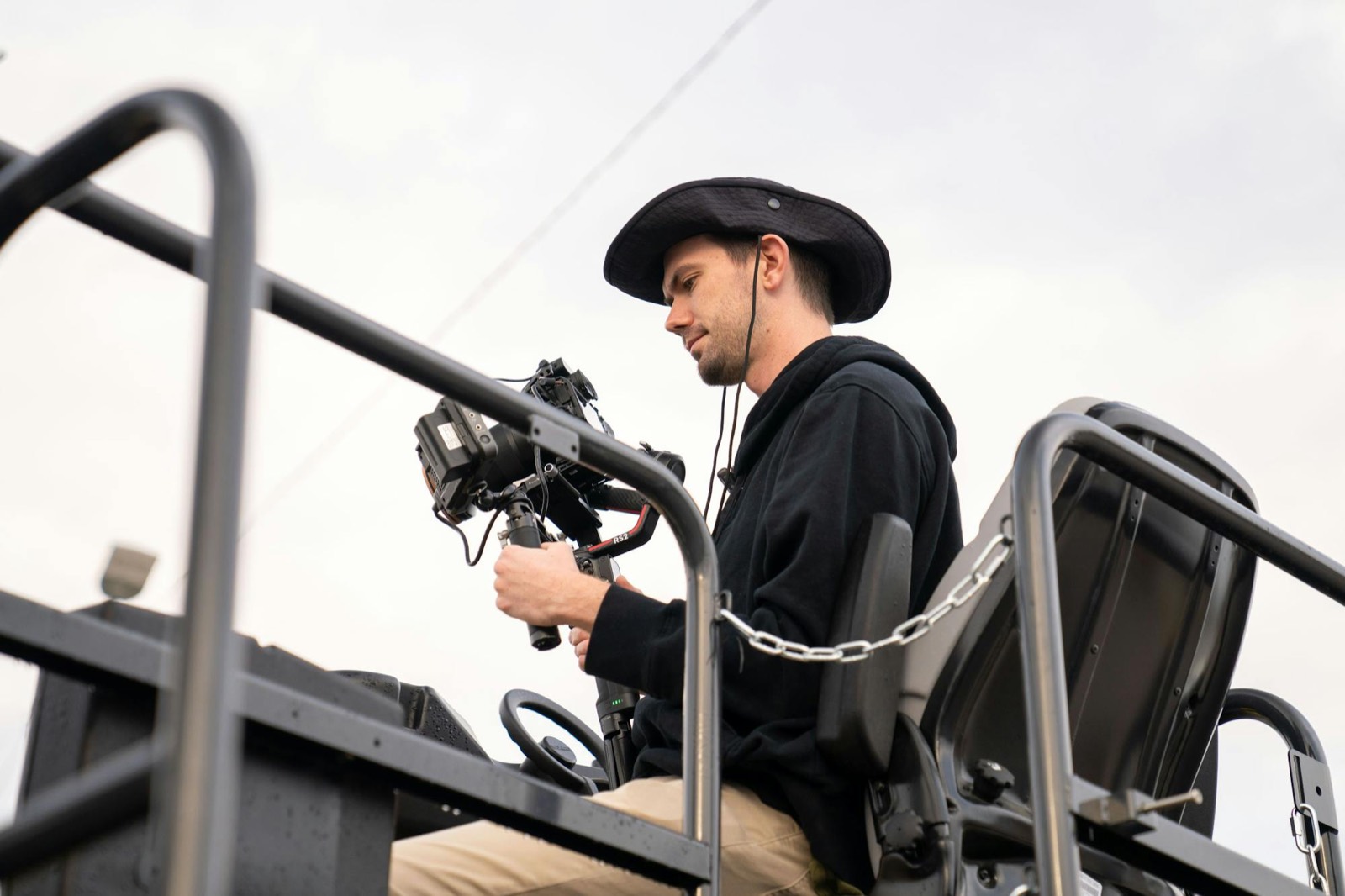
Heavy equipment is hard to explain and easy to misjudge on paper.
Two machines can look identical on a spec sheet and behave nothing alike on a grade. The buyer knows that, which is why he does not decide from the brochure. He decides once he has seen it run, or heard from somebody who has.
Here are five specific jobs video does for a manufacturer that no other asset does as well.
1. It demonstrates what a spec sheet can only claim
Cycle time, reach, breakout force, finish quality, changeover — these are all motion. Put them on a page and they are numbers. Put them on video and they are evidence.
A walkaround of a new excavator or paver can show range of motion, how it holds grade, how the operator's station is laid out, and what the mat looks like behind it. In three minutes a buyer understands the machine well enough to have a real conversation with your rep.
Shoot it working. A machine on a clean showroom floor tells a contractor nothing he trusts.
2. It arms your dealer network
Most manufacturers sell through dealers, and most dealers are training new salespeople on a product line they have never operated.
Video is the cheapest way to fix that. A library of walkarounds, feature explanations, and service how-tos gives every dealer the same story about your equipment — the one you want told, not the one a green rep improvises.
It works on the sales side too. Your dealers' reps need something to send between visits, and most of them will use whatever you give them, if you give them anything.
"This team is knowledgeable about our equipment and our sites." — Jennifer Bishop, Dealer Sales Manager, Dynapac
3. It proves the machine holds up
A manufacturer talking about reliability is marketing. A contractor with eighteen hundred hours on the unit talking about reliability is proof.
Customer testimonials shot on active sites do the work your sales team cannot do for itself. So does footage from inside your plant — the weld shop, the QC line, the people who build it. Buyers in this industry respect manufacturing, and showing yours is one of the few forms of self-promotion they will sit through.
Both of these age well. A testimonial from three years ago still closes deals. A campaign from three years ago does not.
4. It gets you found before the shortlist is made
Search behavior in this industry runs through video. A fleet manager comparing two compactors will watch both walkarounds before he requests either quote. If only one of them exists, the shortlist is already down to one.
Practical version: title the video the way a buyer would search for it, not the way your product catalog names it. Model number plus the job it does. Write a description that actually describes the machine. Put the video on the product page, not on a media page nobody visits.
This is unglamorous and it is where most manufacturers leave the most on the table.
5. It helps you hire the people who build the machines
The hardest constraint for most manufacturers right now is not demand. It is welders, machinists, service techs, and field support.
A job posting competes with every other job posting. A short video of your floor — the work, the equipment, the people who have been there fifteen years — competes with almost nothing, because most of your competitors are not showing anything.
The same footage recruits and sells. A shop tour that makes a buyer confident makes a machinist curious, and you only paid to shoot it once.
What to shoot first
Five benefits is a lot to chase at once, and most manufacturers try to do all of it in one campaign and finish none of it.
A realistic order:
- One walkaround of your highest-margin or newest machine, shot on a customer's site
- Two customer testimonials, filmed the same trip while you are already there
- Three or four short service how-tos on the questions your support line hears most
- A shop-floor piece that works for both buyers and recruiting
- Then repeat with the next product line
That sequence gets you a sales asset, proof, a support asset, and a hiring asset within a couple of shoot days. Anything more ambitious tends to sit half-finished on a drive.
Shoot the walkaround and the testimonial on the same visit. You are already imposing on a customer's schedule — do it once, and get both.
The short version
Video is not a brand exercise for an equipment manufacturer. It demonstrates the product, trains and equips the dealer channel, proves durability, gets you into the consideration set, and helps you staff the plant.
Five jobs, one production schedule. Shoot the machine where it works and cut the footage more than once.
The Eight Videos Every Industrial Company Should Own
How Product Explainer Videos Help Industrial Companies Close More Deals
A hype video out by Friday — and 12x the return on one trade show.

Fort Mill, SC 29708