
 All Case StudiesConstructionManufacturingEquipment DealersTrade Show
Videographer vs. Video Production Company: What's the Difference?
You need video of the plant, the jobsite, or the new machine. Somebody sends you a freelancer's Instagram. Somebody else sends you a production company's website. They both say they shoot video.
They are not the same purchase, and picking wrong costs you a shoot day you cannot get back — especially when the shoot day is a pour, a demo, or a customer's active site.
Here is the honest difference, and when each one is the right call.
What a videographer is
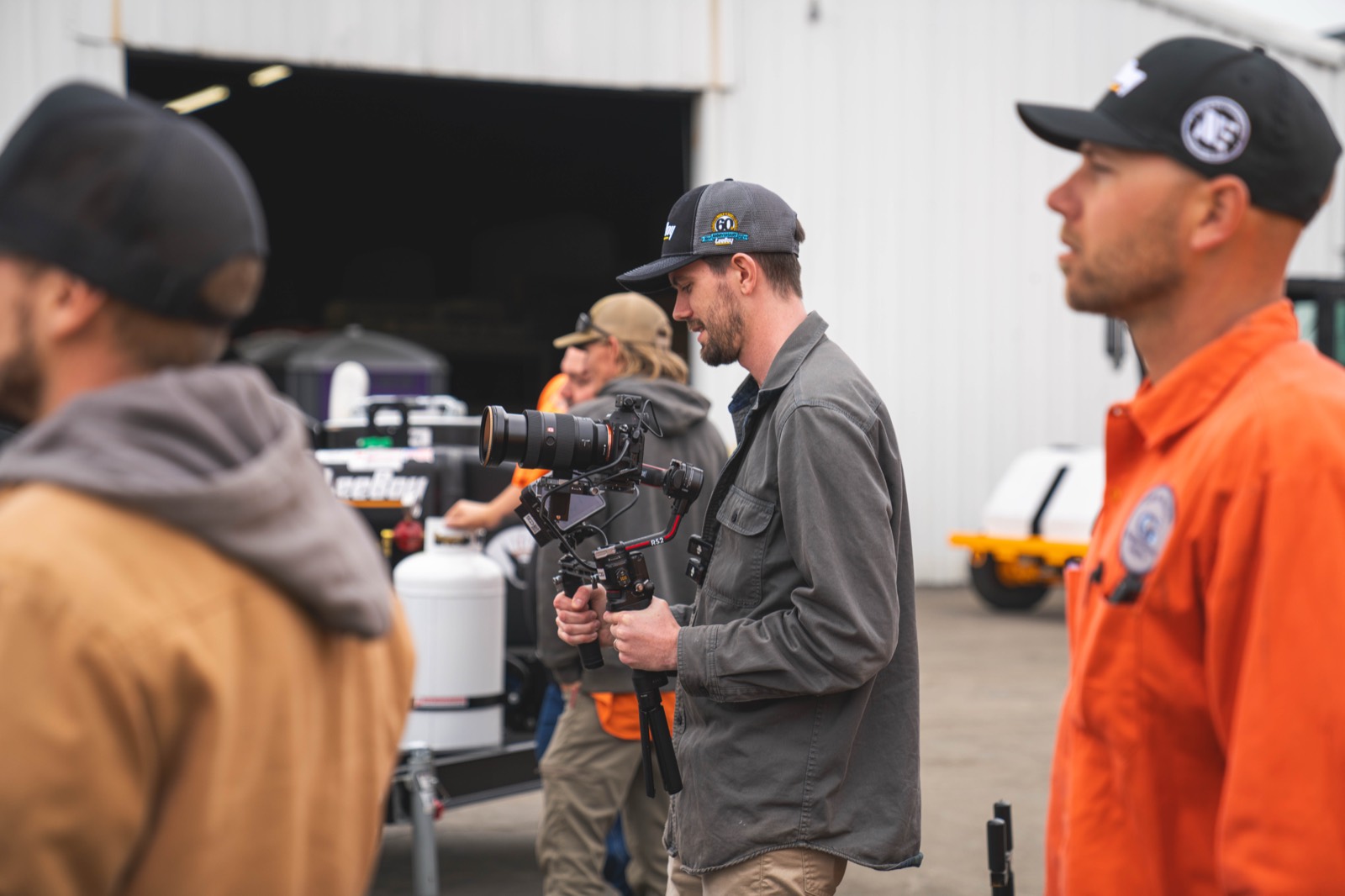
A videographer is one person with a camera. He shows up, shoots what is in front of him, and usually edits it himself.
That is a real skill and there is nothing second-rate about it. For a lot of jobs it is exactly right: a single interview, coverage of a company picnic, a topping-out ceremony, drone footage of a site for a progress update.
What you get is speed, low overhead, and one point of contact who is also the guy holding the camera.
What you do not get is a second set of hands. If the audio fails, nobody catches it. If the demo runs once, there is one angle. If he gets sick the week of your shoot, there is no shoot.
What a production company is
A production company runs the whole thing — planning, crew, shooting, editing, delivery — with different people doing different parts.
That structure exists for a reason. On a real jobsite or a running production line, one person cannot simultaneously operate the camera, run audio, direct a nervous superintendent, watch the machine, and keep the schedule. Something gets dropped, and it is usually audio.
You also get redundancy: backup gear, backup crew, and a producer whose job is making sure the day goes as planned before anyone points a camera.
The difference that actually matters on a jobsite
Forget the org chart. The question that predicts how your shoot goes is whether the people showing up have worked around your kind of operation before.
A crew that has not will slow your people down. They will stand in a blind spot, ask the operator to run the machine again in a way that makes no sense, and turn a two-hour capture into a lost morning. Your superintendent will remember that longer than he remembers the video.
A crew that has will arrive with PPE, know where they can and cannot stand, and work around production instead of stopping it.
"Having CDS be so comfortable around heavy equipment really brings a peace of mind to us. Their heads are on a swivel, and they're not going to be a safety concern for us." — C.W. Matthews
Ask about this directly. Ask what sites they have shot on, what their safety orientation looks like, and whether they carry the insurance your GC or plant will require. A good answer is specific. A bad answer is a reel.
Scope: one deliverable or a system
The other real dividing line is what you need at the end.
If you need one video, a videographer can deliver one video.
If you need a walkaround for the product page, six short cuts for social, a booth loop for the spring show, two customer testimonials, and stills for the sales deck — all cut from the same footage, consistent with each other, delivered on a schedule — that is a production problem, not a camera problem.
Most industrial marketing teams discover this the hard way, about a year in, when they have forty clips from five different people and none of them look like they came from the same company.
Equipment differences are less important than you think
Camera bodies stopped being the bottleneck a while ago. A competent freelancer's kit will produce images that hold up fine on a product page or LinkedIn.
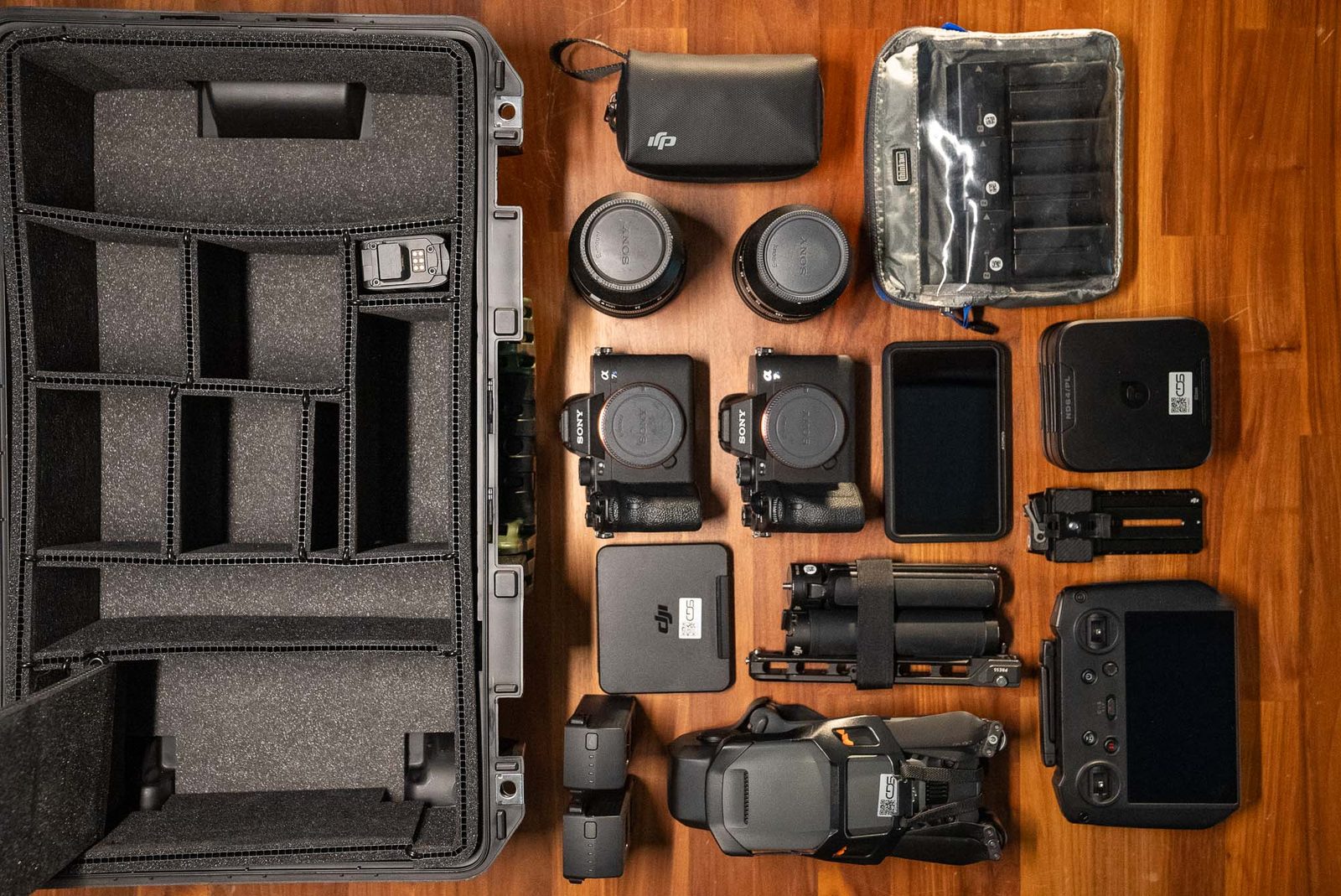
Where gear still separates the two is in the things that fail quietly: wireless audio that survives a noisy plant, lighting that works in a dark shop bay, drone pilots who are actually licensed for commercial work, and enough backup that a dead battery does not end the day.
Ask what happens if a camera dies at ten in the morning. The answer tells you more than a gear list.
How to choose
Go with a videographer when the job is contained, the site is safe and slow, one angle is enough, and you can afford to reshoot if it does not work out.
Go with a production company when:
- The shoot happens once — a demo, a pour, a launch, a show floor
- You are on an active site or a running line and safety is a real constraint
- You need multiple deliverables cut from one day
- The footage has to match what you shot last year and what you shoot next year
- The people on camera are customers, and a bad experience costs you more than the video is worth
That last one gets underrated. When you put a customer in front of a camera, the shoot is a customer interaction. It should feel professional to them.
The short version
It is not a quality question. It is a risk-and-scope question.
One-off, low-stakes, one angle: a videographer will serve you well. Repeatable, on-site, multiple deliverables, customers on camera: hire the crew that has done it before in your industry.
Video Production Equipment: The Definitive Checklist for 2026
The Art of Writing Video Scripts: Tips for Captivating Content
Best Marketing Video of 2024 — and Contractor of the Year the following year.

Fort Mill, SC 29708